Layering 101; How to Dress Effectively.
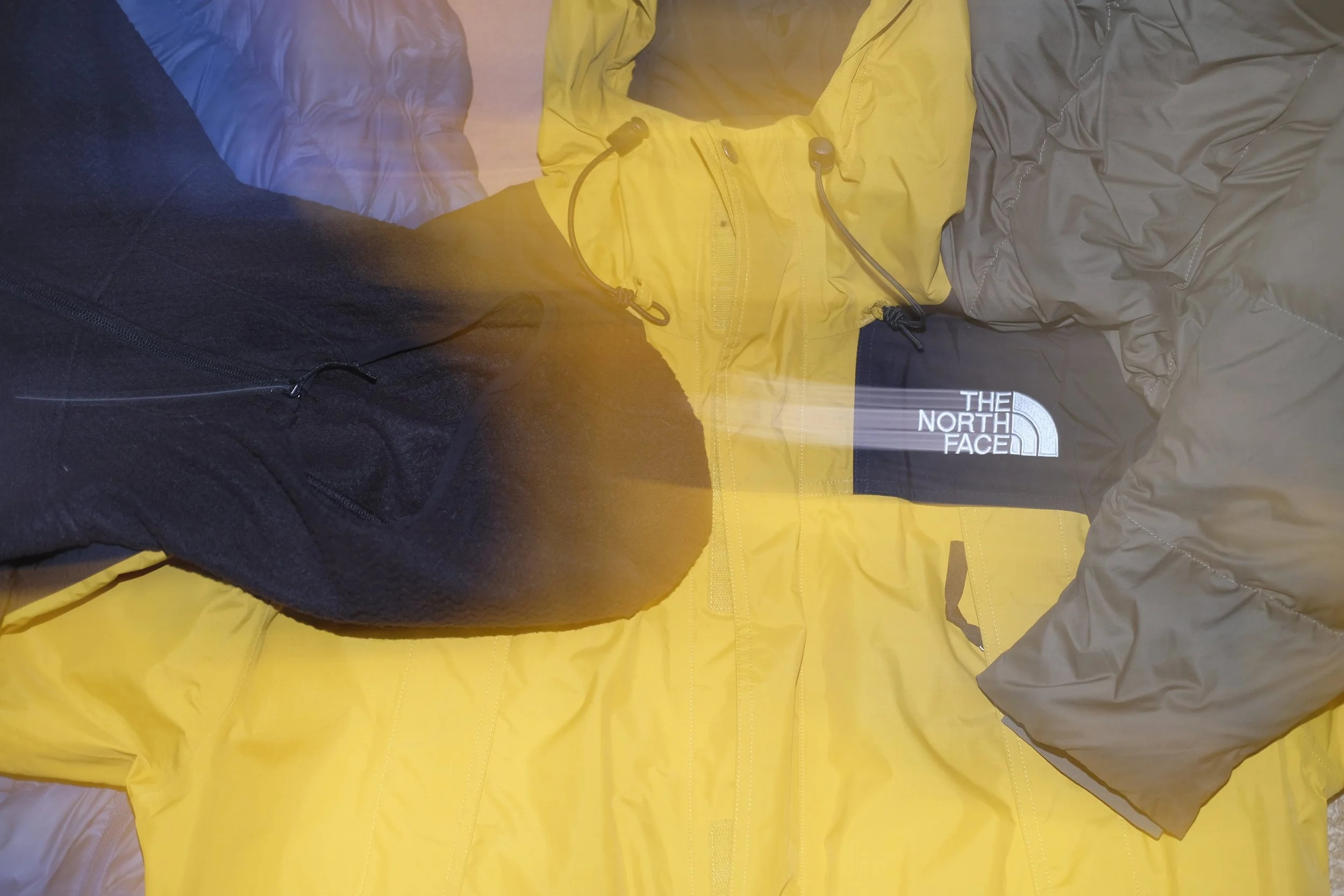
Whether you’re hiking, skiing, or climbing, you’re constantly shedding layers, stuffing them in a pack, and then pulling them back out. You’ll find yourself repeating this process again and again throughout the day. It can be a real pain in the ass!
To make this process easier, it’s important to keep your layering simple and lightweight. Ideally, your kit will maximize warmth without sacrificing mobility. To achieve this, follow a simple base, mid, and outer layer system.
BASE LAYER.
Start with your base layer; this is what’s closest to your skin. It’s job is to not only lock in body heat, but more importantly, to wick moisture. Therefore, material is extremely important. AVOID COTTON AT ALL COSTS!
For fabrics, you’ve got two options: natural or synthetic. As far as natural fabrics go, merino wool is the most popular. And that’s for good reason; it’s light-weight, moisture-wicking and breathable, insulating when wet or dry, and even odor resistant! The cons? It’s expensive. Like $25 for a pair of socks expensive. Plus, as an extremely fine-woven material, it doesn’t offer much durability.
Synthetic fabrics, like nylon and polyester, are much more affordable and durable. Additionally, they tend to perform just as good, if not better when it comes to wicking moisture. The major con here is they get stinkier much faster so you’ll need to pack more on a trip.
Whatever you go with, make sure the garment fits snug. It doesn’t have to be skin-tight, but a close-fitting base layer will do a better job at maintaining core temps compared to a loose fit.
MID LAYER.
Your mid layer’s job is to insulate. Ideally, it’ll keep you warm while staying breathable. Fleece works great for this!
Fleece comes in many different weaves and weights, so it’s nice to have a few. This way, you can choose the right one depending on your adventure. A soft, fuzzy fleece, like a Patagonia Synchilla works great for everyday use; they’re real comfy and plenty warm. However, with a bulkier design, they’re less than optimal for activity. A hard-face fleece, more like a TNF Denali offers pretty much the same thing, with some added wind and water protection which makes it a good stand-alone option on a fair-weather day.
Our personal preference is a good micro fleece. Something like a Mountain Hardware Microchill. With an extremely thin design, micro fleeces work great in a layering system as they are easy to shed and stuff, or throw under another insulating layer on a colder day.
PUFFER JACKETS.
Puffer jackets are great to have. Much like fleece, they come in many shapes and sizes, so you can play around and choose what works best for you and the rest of your kit.
A lightweight puffer, something like a Patagonia Nano Puff, is a great option. They pack down small, and offer lots of warmth without sacrificing mobility. For less strenuous activity, go for a thicker option with more fill, like a TNF Nuptse. A puffy like this can easily be used as a mid/outer layer.
OUTER LAYER.
Your outer layer is furthest from your skin, and locks everything in. A good outer layer will protect you from the elements; wind, snow, rain, etc.
Whether you go lightweight with a rain-jacket, like an Arc’teryx Beta, or heavier and warmer with an insulated snow shell, like a Burton Swash, we strongly recommend Gore-Tex here in the North West. With the heavy rainfall, and extremely wet snow conditions, your ability to stay dry will make or break your whole layering system – and your day!